
AT-research
Research audiometer
Audiometry for research and development
Applications
Flexible audiometry for scientific research: AURITEC offers research audiometers, test procedures and complementary solutions for the assessment of hearing ability, speech understanding and spatial hearing.
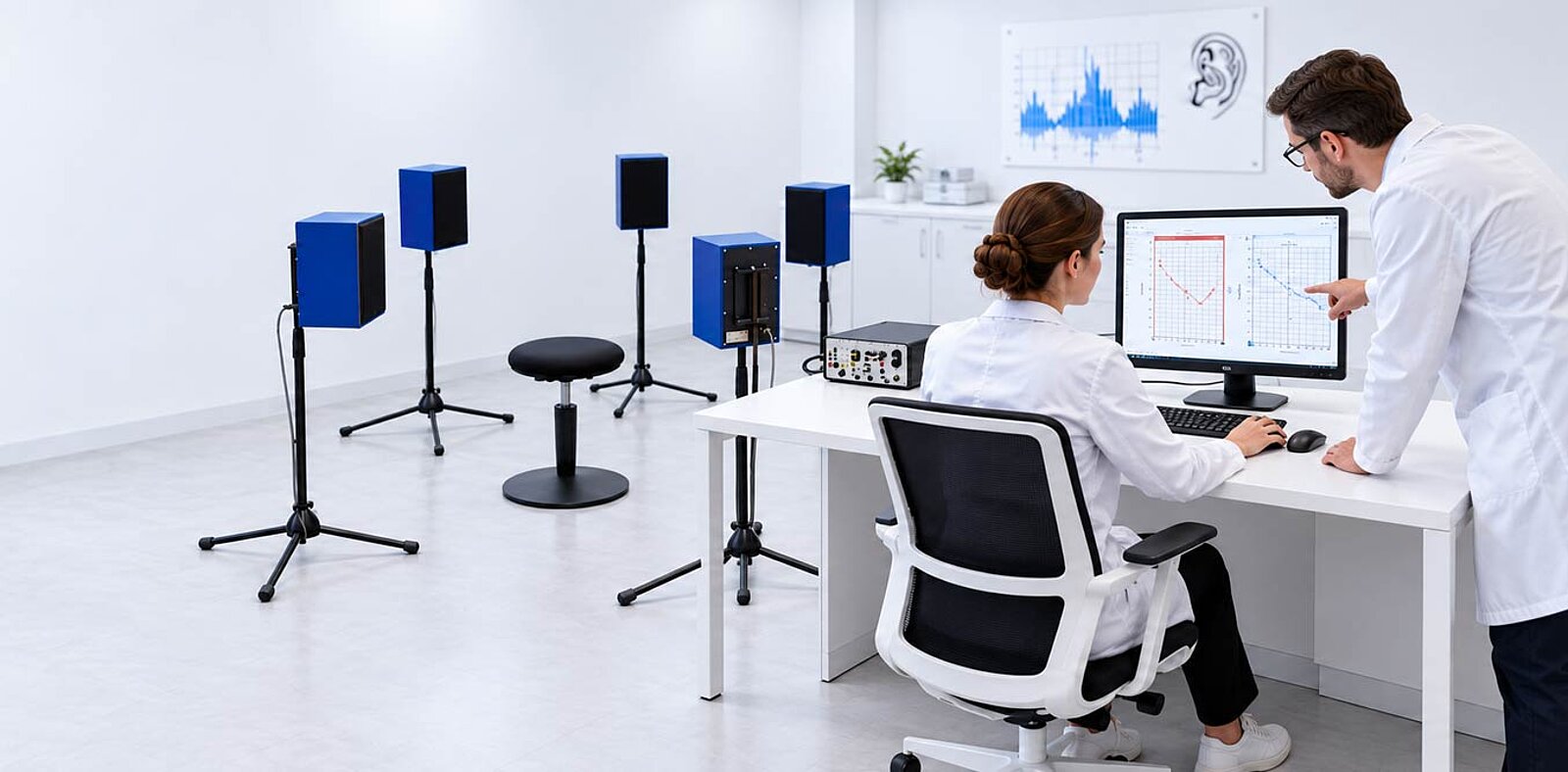
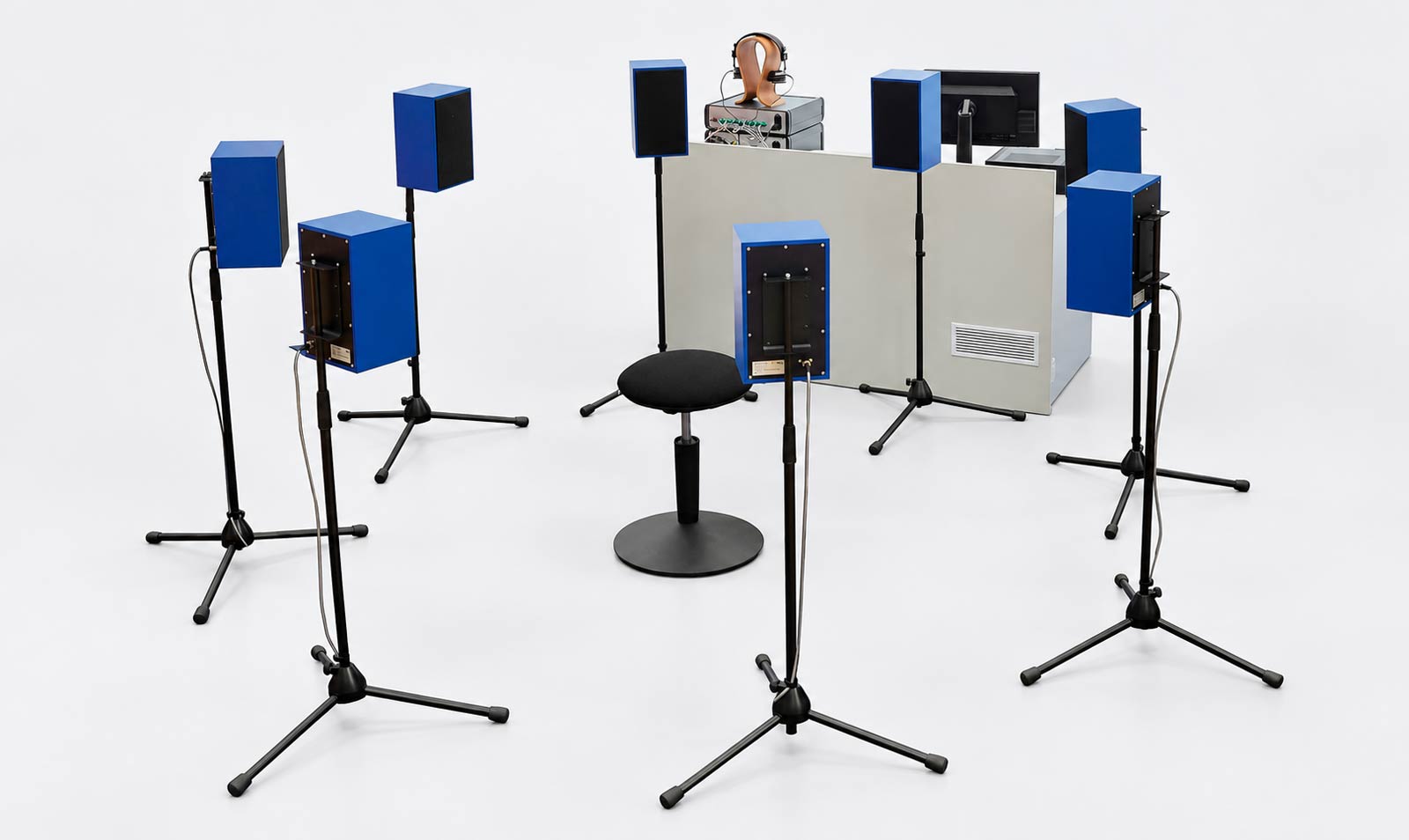
Presenting speech and background noise from different directions, outputting multiple signals simultaneously or combining different sound transducers: audiological research requires measurement set-ups that can be specifically adapted to the research question at hand.
The AT-research enables customised study configurations with flexible transducer selection and multi-channel audiometry. Suitable test procedures, direct connection of compatible CI processors and ERKI for testing directional hearing further enhance the range of investigative options. Together, we will tailor the equipment to your study protocol and the available space.
Research audiometer
Audiometry for research and development

The Oldenburg language method
Speech audiometry in the presence of background noise

Speech audiometry for children
Oldenburg Children’s Sentence Test
Simplified Matrix Test
International Matrix Test for Children
Automatic and adaptive
Screening for children in several languages

Animal Sound Test
Automatic and adaptive
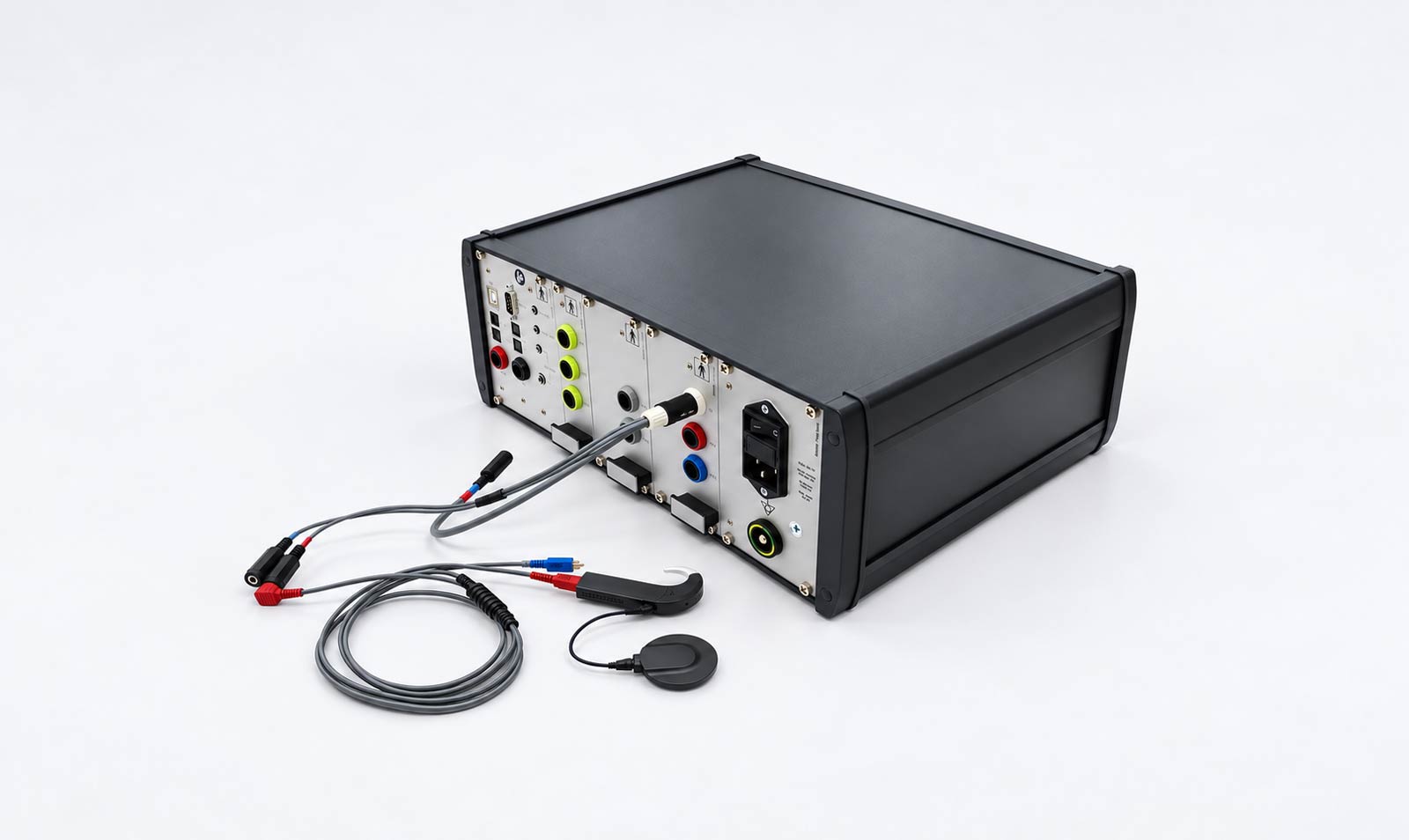
Direct connection to processors
Non-invasive testing of cochlear implant patients
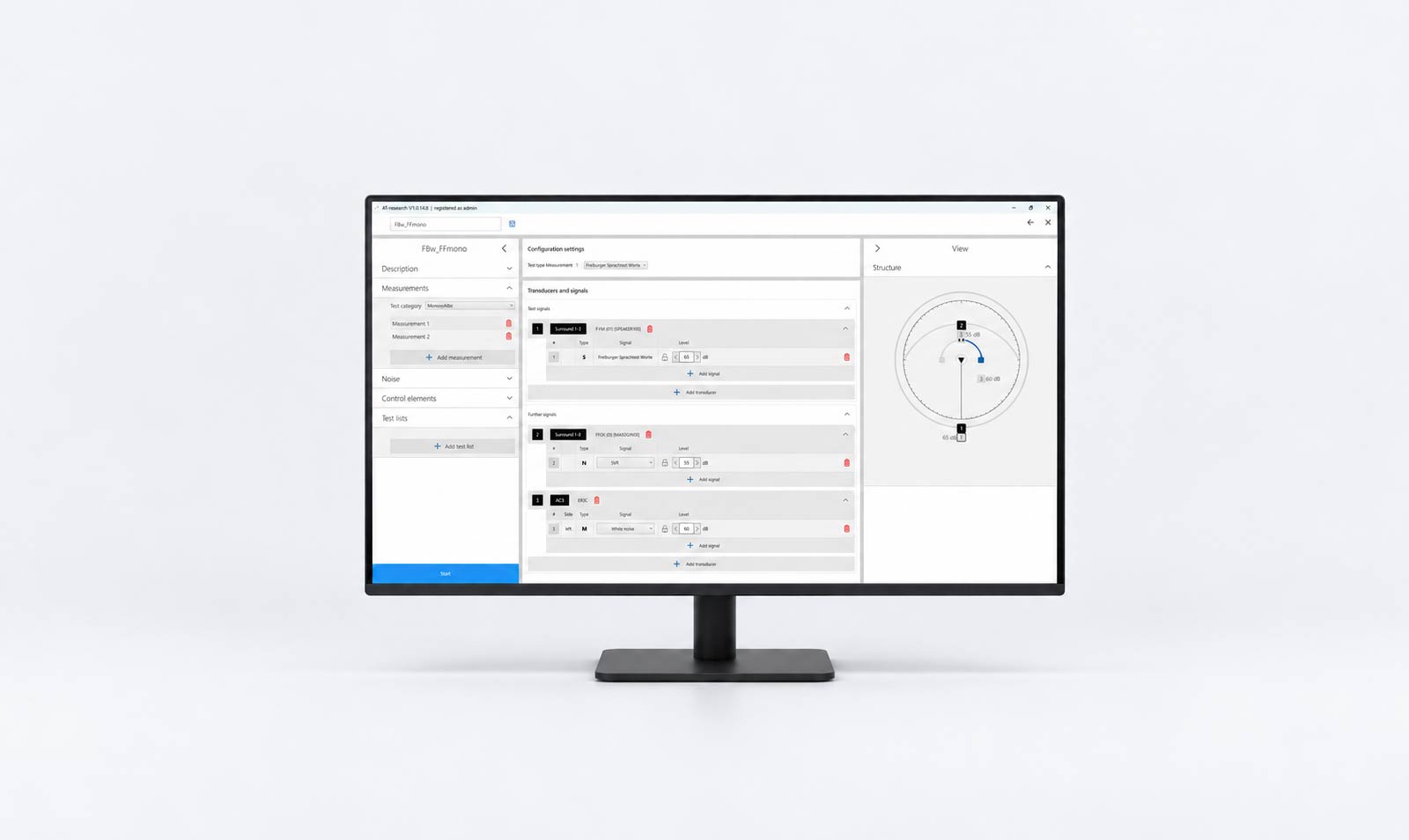
Everyday audiometry
More than two channels
The AT-research was developed for customised audiological measurement set-ups. It allows for flexible selection of transducers and the simultaneous output of different signals. Level and sound directions can be specifically varied via free-field channels. The specific configuration depends on the study protocol.
Several signals can be output simultaneously via different transducers. This makes it possible, for example, to reproduce speech and background noise from different directions. This allows for investigations to be carried out under specifically defined acoustic conditions.
The implant connector allows signals to be transmitted directly to compatible CI processors. This bypasses acoustic transmission via room and processor microphones. Whether a direct connection or free-field measurement is appropriate depends on the research question. Compatibility and calibration must be agreed in advance.
The study protocol, the intended patient groups or test subjects, and the required signals, test procedures and transducers are all useful. In addition, there are requirements regarding loudspeaker arrangement, room acoustics and calibration, as well as an overview of the available equipment.